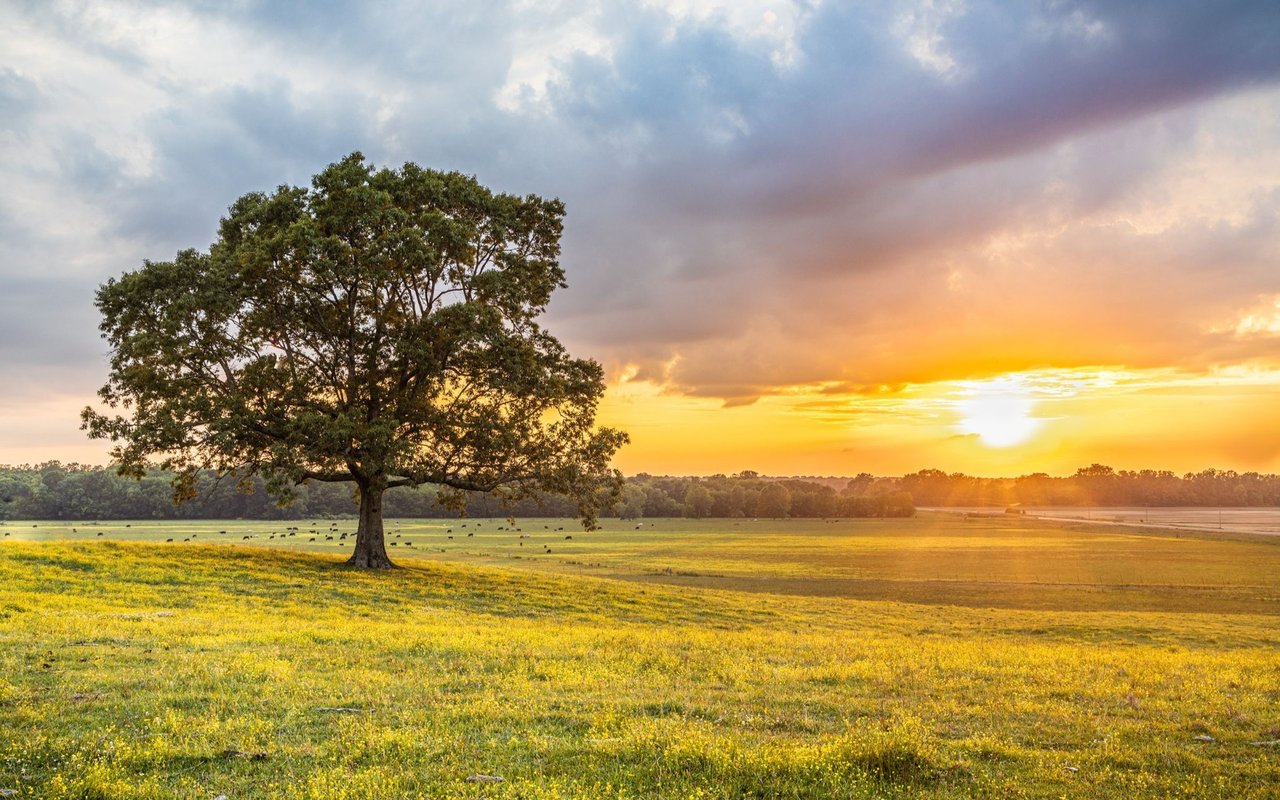
Clay County pastureland rented for an average of $12.50 an acre in 2026, according to USDA National Agricultural Statistics Service survey figures released in August and republished by TallyTill. In 2025 the figure was $11, a 13.6% jump in one year. Across the same months, the Texas Real Estate Research Center put the median price of rural land in its Region 3, the region that includes Clay, Wichita and Archer counties, at $3,008 an acre for the four quarters through June 2026.
Divide one by the other and grazing rent returns about 0.4% of the price a year, before property taxes, fence repair, water or anything else an owner pays. At that rate the grass would take roughly 240 years to pay for the acre.
So whatever sets the price of ranchland around Henrietta, it isn't the grazing income. For a buyer, that means the lease on a tract and the price of calves can't prove an asking price is right. For a seller, it means pointing to either one won't hold a price up.
The rent went up. The gap stayed the same.
A rising rent sounds like it should close the distance. It didn't, because prices rose at almost the same pace. Clay County's pasture rent climbed 13.6% from 2025 to 2026. The Region 3 median price per acre climbed 14.29% year over year in the Texas Real Estate Research Center's second-quarter 2026 report, posted Aug. 20. The ratio barely moved.
The neighboring counties sit in the same narrow band. Here are the 2026 pasture rents from the same NASS-derived table, with the official 2025 NASS county release for comparison:
| County | 2026 pasture rent, $/acre | 2025 pasture rent, $/acre |
|---|---|---|
| Clay | $12.50 | $11.00 |
| Archer | $12.50 | $11.00 |
| Jack | $12.00 | $7.50 |
| Wichita | $10.50 | $9.00 |
| Montague | $14.00 | not published |
| Texas average | $8.60 | $7.70 |
The 2025 column comes from the USDA NASS Texas county cash rent release dated Aug. 22, 2025. TallyTill states that NASS does not endorse its republished figures. The statewide numbers match the 2026 averages in Texas A&M AgriLife's Texas Agriculture Law summary.
Rent across this corner of North Texas runs from roughly $10 to $14 an acre. Keep that narrow range in mind for the next comparison.
Montague's rent is close to Clay's. Its land prices aren't.
Montague County, the next county east of Clay, rented pasture at $14 an acre in 2026, just $1.50 more than Clay. The Texas Real Estate Research Center puts Montague in a different region, Region 4, where the median price for the four quarters through June 2026 was $8,604 an acre, down 5.96% year over year.
Those regional medians aren't county prices, and the regions sell differently. Region 3's typical tract in that period was 409 acres. Region 4's was 119. Smaller tracts usually carry higher per-acre prices, and the report itself says its figures are broad indicators, not the value of any particular farm or ranch.
Grass on either side of the county line rents for about the same money, yet the land under it trades at prices nearly three times apart at the regional level. If grazing income set the price, those two numbers would track each other. They don't. Tract size, location and who is buying do far more to set the price.
Calves near $400 a hundredweight, rent near $12.50
Cattle prices are where most people expect the land story to start. In the USDA's Texas weekly auction summary for the week ending Oct. 30, 2026, Medium and Large 1 steers weighing 500 to 549 pounds averaged $407.31 per hundredweight at a 532-pound average weight. That works out to about $2,167 for a single calf. The USDA report described demand as moderate to good, with recent rain renewing hope for wheat pasture.
Set that calf next to the grazing lease side of the ledger. The Texas Chapter of the American Society of Farm Managers and Rural Appraisers reported year-long rangeland leases in its North Texas group at $150 to $240 per animal unit for 2025. One calf at that late-October average brought roughly nine to fourteen times a year's grazing lease per animal unit at those 2025 rates.
Strong calf prices land first in the operator's sale check. How much reaches the landowner through rent is slow to show up, and the rent survey only records a modest move. The same ASFMRA report, covering the North Texas counties in its Region 4, says cattle prices remained strong but "showed limited direct correlation with land values at current price levels."
The grass has its own problems this year. Texas A&M AgriLife reported on Sept. 29 that pasture and rangeland in both the North and Rolling Plains districts ranged from very poor to fair, with low stock tanks in the North district and cattle in the Rolling Plains getting cake and hay because grazing was poor. By AgriLife's Oct. 27 update, parts of the Rolling Plains had picked up 3 to 7 inches of rain and pastures were greening, but supplemental hay was still being fed. AgriLife Extension economist David Anderson said in August that drought across the Great Plains was keeping herds from expanding, with only 100,000 heifers retained in the July cattle report. When fewer cows go back onto pasture, there's less pressure to bid up grass rent, whatever calves are bringing.
Where the rest of the price comes from
If grazing covers less than half a percent, the rest of a buyer's dollar is going somewhere else. The regional data points to several places:
- Hunting income, which adds less than people expect. ASFMRA's 2025 North Texas table puts hunting leases on rangeland at $6 to $15 an acre. Even a tract that could carry both a grazing lease and a hunting lease at the top of those ranges would gross about $30 an acre, around 1% of the Region 3 median.
- More money chasing fewer acres. In the four quarters through June 2026, Region 3 recorded 533 sales, up 1.91%, while total acres sold fell 3.47% to 76,217 and total dollar volume rose 10.32% to $229.26 million. Slightly more deals, fewer acres and more dollars is what you'd expect when buyers want land for reasons other than what it earns.
- Demand that has nothing to do with farming. ASFMRA's Region 3 narrative names solar and wind development, plus interest in AI facilities around Wichita Falls, including one proposed at Wichita Falls.
- The cost of money and the alternatives to land. For 2025, ASFMRA tied stable rangeland prices in North Texas to higher borrowing rates and to competing investments such as the stock market. It described dryland and pasture sales as "sluggish at best."
That last point covers 2025 sales, and the 2026 regional data shows prices rising since then. Either way, the forces named are financial and strategic, not agricultural. A Clay County buyer is paying mostly for what the land is to them: a place to run cattle at a loss or break-even, a place to hunt, somewhere to build, or a long-term store of value. A sale price reflects how many buyers want that, not how much grass grows on the place.
What this changes at the closing table
This gap shows up in real conversations during a sale.
- A buyer underwriting on the lease will come up short every time. At $12.50 an acre, the existing grazing lease on a tract won't cover the cost of owning it at anything close to regional prices. The lease is worth knowing about for its terms and the tenant relationship, not as support for the price.
- A seller pointing to cattle prices is making a weak case. Calves near $400 a hundredweight make good headlines, but the appraisers' own report finds limited direct correlation between cattle prices and land values. Comparable land sales carry far more weight.
- Regional medians are a starting point, not a price. The $3,008 figure blends large tracts across a region that stretches well beyond Clay County. A 409-acre typical tract in that data doesn't price a 40-acre homesite near Henrietta, and the Montague comparison shows how much tract size and location move the number.
- The features that drive value are physical and specific. Since grazing income explains so little, water, fencing, access, outbuildings and the hunting setup carry the weight in pricing. Those are the details a buyer should verify in person and a seller should document before listing.
This is general market information, not legal, tax or financial advice. Confirm your own situation with a lender, appraiser, attorney or tax professional before you act on it.
FAQ
Does the rise in Clay County pasture rent mean land values will keep climbing?
Not on its own. Rent rose 13.6% from 2025 to 2026, and Region 3 prices rose 14.29% over the four quarters through June 2026. Both moved, but at under half a percent, rent is too small a share of the price to drive it.
Why use the Region 3 median for Clay County?
The Texas Real Estate Research Center reports its quarterly figures by broad region, and Clay, Wichita and Archer fall in Region 3. It's the closest current public indicator, and the report itself says it doesn't represent the value of any specific ranch.
Is cattle income a better way to judge a ranch's price than rent?
The cattle operator collects the calf check, and the landowner collects the rent. Strong calf prices in 2026 haven't turned into rents anywhere near what land sells for, and ASFMRA's North Texas appraisers report limited direct correlation between cattle prices and land values.
Williams Realty and Land prices and markets Clay County ranches on their water, fencing, access and outbuildings, through the MLS, the land portals or a time-defined auction that shows what buyers will pay. Call to schedule a showing or register to bid.